Close Menu
The Daily RepublicThe Daily Republic
    What's Hot
    Drone attacks kill 14 civilians in Sudan's West Kordofan

    Drone attacks kill 14 civilians in Sudan’s West Kordofan

    November 29, 2026
    ‘Civic society has to make people aware about delimitation and other country’s pressing issues’

    ‘Civic society has to make people aware about delimitation and other country’s pressing issues’

    November 29, 2026
    Shape up or ship out, Damodar tells doctors

    Shape up or ship out, Damodar tells doctors

    November 29, 2026
    Facebook X (Twitter) Instagram
    The Daily RepublicThe Daily Republic
    Facebook X (Twitter) Instagram
    • Home
    • India
    • Politics
    • Telangana
    • World
    • Technology
    • Business
    • Education
    • Travel
    • Sports
    • Entertainment
    • More
      • Visas & Immigration
      • Government Updates
      • Press Releases
    The Daily RepublicThe Daily Republic
    Home»India»Common but differentiated responsibilities: Foundation of India’s climate diplomacy
    India

    Common but differentiated responsibilities: Foundation of India’s climate diplomacy

    DAILYREPUBLICBy DAILYREPUBLICNovember 29, 2026Updated:November 29, 2026No Comments5 Mins Read
    Share Facebook Twitter Pinterest LinkedIn Tumblr Telegram Email Copy Link
    Follow Us
    Google News Flipboard
    Common but differentiated responsibilities: Foundation of India’s climate diplomacy
    Share
    Facebook Twitter LinkedIn Pinterest Email

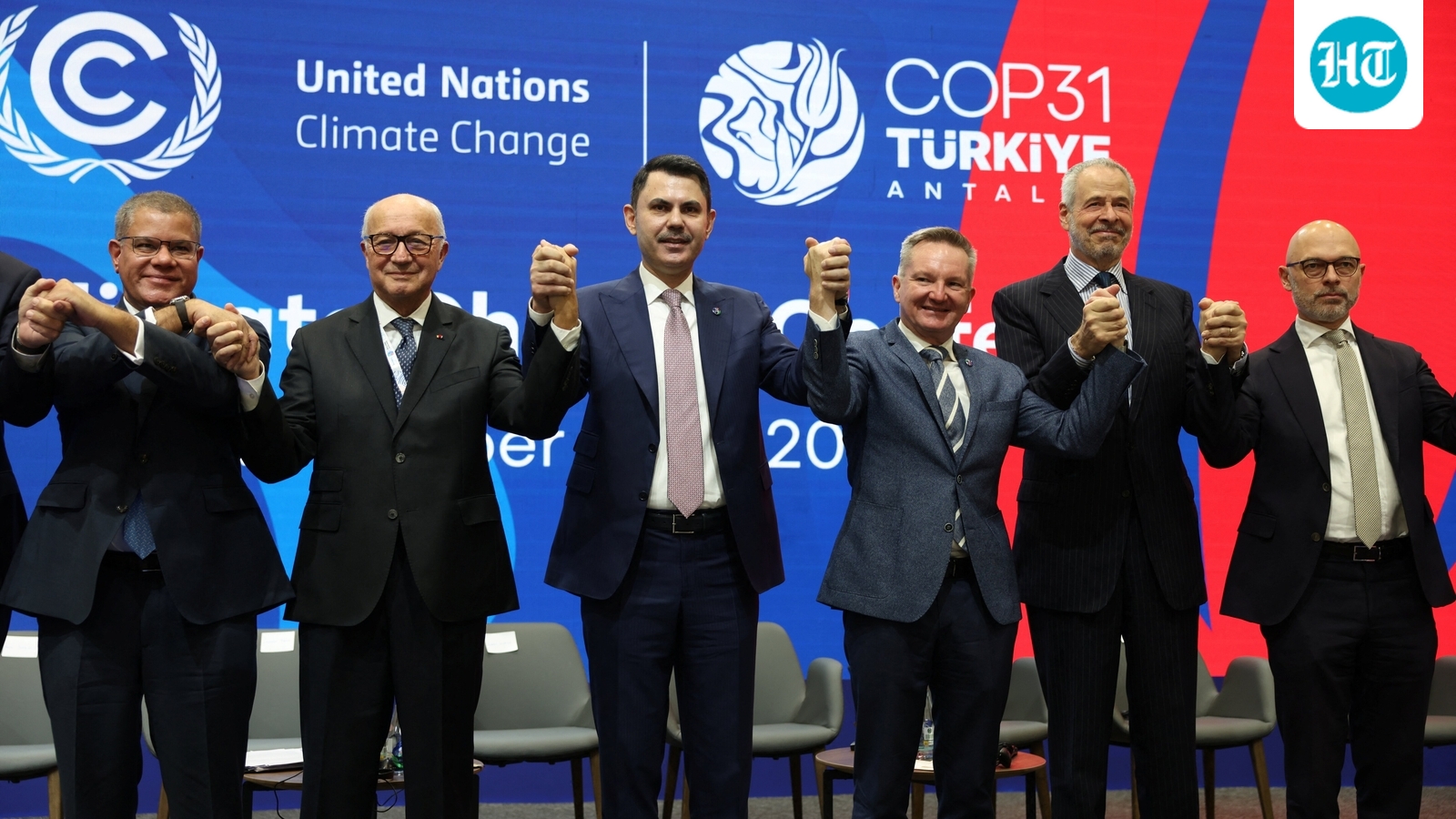
    The recently concluded COP-31 summit failed to reach an agreement on the climate crisis. There was debate about the inclusion of fossil fuels in the draft text, which resulted in the breakdown of the overall agreement. Countries such as Saudi Arabia and Russia objected to the agreement’s inclusion of fossil fuels, as their economies rely largely on revenue from fossil fuel sales. India has also rejected the inclusion. India’s position at COP-31 is linked to its desire to ensure its energy security, which is critical for economic growth. India faced criticism and accusations of hypocrisy. Before criticising India’s stance on the climate crisis, it is important to grasp the ideology that underpins India’s approach to the subject. India’s approach to the climate crisis has progressed through three stages. However, each phase is predicated on the notion of common but differentiated responsibility.

    The climate crisis is the most significant transformation of the earth in a long time. The earth is being transformed as a result of human activity. It has been argued that the earth has entered a new period known as the Anthropocene (in which human action is the dominating force shaping the state of the earth). Rising global temperatures, also referred to as global warming, are the dominant force influencing the earth’s climate. This process is mostly triggered by carbon emissions in the earth’s atmosphere. The global temperature has risen by more than 1 degree Celsius from pre-industrial levels. At the current rate, it is anticipated to hit 1.5 degrees Celsius by 2030, a decade earlier. It has various consequences, including increasing volatility and chaos in all weather systems, sabotage of a wide range of ecosystems, shifts in precipitation patterns, melting ice caps, and sea level rise.

    India’s susceptibility and willingness to behave responsibly in global affairs prompted it to take an active part in global climate change efforts. India’s attitude to climate change has been shaped by its beliefs in climate equity and colonial past. India recognises that the process of industrialisation is primarily responsible for the climate crisis, but this development has been unequal throughout the region. The development of industrialisation began in the West in the 18th century. Industrialisation arrived late in developing nations, including India, and did not have a significant impact on the economies of these countries. Its contribution to global carbon emissions is negligible, but it has increased their vulnerability to the West’s faults. They are also among the least progressed in terms of developing advanced technology and commercial buffers to address the climate crisis. The primary example of this buffer is establishing alternative sources for food imports in the event of a national food crisis. Second, these emerging countries, like India, were victims of European colonisation. Imperial countries used the developing world’s economic resources to grow their economies while polluting the environment.

    As a result, the common but differentiated responsibility principle has affected India’s approach to climate. This means that while climate change is a global issue, the West bears greater responsibility for addressing it. India’s approach has been divided into three phases. The first phase began in 1992 and ended in 1997. During this era, India concentrated on developing an international regime and climate agenda, as well as quantifying Annex I parties. India aimed to represent the interests of the poorest and least developed countries. It emphasized that these countries should be assigned less responsibility because their contribution to carbon emissions has been minimal, and their per capita income is likewise modest. India fought for climate funding, technology exchange with the least developed countries, and protecting the third world from the harshest effects of climate change during the second phase, which ran from 2000 to 2009. The third phase began with the Copenhagen summit in 2009 and is still in operation. During this phase, India took a more flexible, comprehensive, and cooperative response to climate change. Domestically, India enacted the National Action Plan on Climate Change in 2008. India discussed its voluntary emission reduction targets at the 2015 Paris climate summit. India did not abandon the notion of common but differentiated responsibility. India sought to build a worldwide developing-country coalition on the issue of the climate crisis.

    India’s climate approach is based on the climate equity ideology, which is founded on the principle of common but differentiated responsibility. India argues that countries’ contributions to the challenge of the climate crisis have varied. This truth must be addressed while developing a strategy to combat the climate crisis. India’s contribution to global warming began late and has been negligible in the past. This aspect prompted India to oppose the inclusion of fossil fuels in the accord. India cannot afford to risk its energy security without enough technological and financial backing from the western world, which has been a major contributor to global warming. India is one of the top five carbon emitters, and its emissions will only rise. India requires a policy that tackles both climate equality and carbon emissions.

    (The views expressed are personal)

    This article is authored by Mohammad Rizwan, assistant professor, RDM College, Patliputra University, Patna.

     
    climate changeenergy securityfossil fuelsclimate crisis

    common differentiated foundation Indias responsibilities
    Share. Facebook Twitter Pinterest LinkedIn Tumblr Email
    DAILYREPUBLIC
    • Website

    **The Daily Republic** is an India-focused digital news platform bringing you the latest updates on national affairs, politics, business, technology, education, travel, sports, and world news. Stay informed with timely news, important developments, and stories that matter. **Your Window to India and the World.**

    Related Posts

    ‘Civic society has to make people aware about delimitation and other country’s pressing issues’

    ‘Civic society has to make people aware about delimitation and other country’s pressing issues’

    November 29, 2026
    Getting the next 26/11 right

    Getting the next 26/11 right

    November 29, 2026
    Christians in State urged to make use of govt. welfare schemes

    Christians in State urged to make use of govt. welfare schemes

    November 29, 2026
    Add A Comment
    Leave A Reply Cancel Reply

    Economy News
    Drone attacks kill 14 civilians in Sudan's West Kordofan

    Drone attacks kill 14 civilians in Sudan’s West Kordofan

    By DAILYREPUBLICNovember 29, 2026

    Khartoum Drone attacks killed 14 civilians on Sunday (November 29, 2026) in Sudan’s West Kordofan state, which is largely controlled by the paramilitary Rapid Support Forces (RSF), witnesses, an RSF source and a local monitoring group said. The RSF has been battling Sudan’s army since April 2023 in a war that has killed tens of…

    ‘Civic society has to make people aware about delimitation and other country’s pressing issues’

    ‘Civic society has to make people aware about delimitation and other country’s pressing issues’

    November 29, 2026
    Shape up or ship out, Damodar tells doctors

    Shape up or ship out, Damodar tells doctors

    November 29, 2026
    Top Trending
    6 killed, several injured after gunman opens fire in Poland’s Krakow; suspect arrested

    6 killed, several injured after gunman opens fire in Poland’s Krakow; suspect arrested

    By DAILYREPUBLICNovember 7, 2026

    Six people were killed and 15 injured after shots were fired in a market square in Krakow, Poland, on Saturday, according to the Lesser Poland Voivodeship provincial authorities.

    6 killed, several injured after gunman opens fire in Poland’s Krakow; suspect arrested

    6 killed, several injured after gunman opens fire in Poland’s Krakow; suspect arrested

    By DAILYREPUBLICNovember 7, 2026

    Six people were killed and 15 injured after shots were fired in a market square in Krakow, Poland, on Saturday, according to the Lesser Poland Voivodeship provincial authorities.

    CJP’s Abhijeet Dipke predicts ‘Modi govt’s defeat in 2029’ at anti-SIR rally in Kochi: ‘He will definitely go’

    CJP’s Abhijeet Dipke predicts ‘Modi govt’s defeat in 2029’ at anti-SIR rally in Kochi: ‘He will definitely go’

    By DAILYREPUBLICNovember 7, 2026

    CJP founder Abhijeet Dipke on Saturday predicted that the Modi government would be voted out of power in the 2029 Lok Sabha elections and urged people to prepare for a change of government at the Centre.

    Subscribe to News

    Stay informed with the latest news, breaking headlines, and important updates from India and around the world, delivered straight to your inbox.

    The Daily Republic is your trusted source for the latest news and updates from India and around the world. Stay informed with coverage of politics, business, technology, education, sports, entertainment, and current affairs.

    Facebook X (Twitter) Instagram Pinterest YouTube
    Recent Posts
    • Drone attacks kill 14 civilians in Sudan’s West Kordofan
    • ‘Civic society has to make people aware about delimitation and other country’s pressing issues’
    • Shape up or ship out, Damodar tells doctors
    • Common but differentiated responsibilities: Foundation of India’s climate diplomacy

    Subscribe to Updates

    Stay informed with the latest news, breaking headlines, and important updates from India and around the world, delivered straight to your inbox.

    • About Us
    • Contact Us
    • Disclaimer
    • Privacy Policy
    • Terms and Conditions
    © 2026 The Daily Republic. All Rights Reserved.

    Type above and press Enter to search. Press Esc to cancel.