





The purchases were reportedly routed through lesser-known Chinese suppliers rather than Nvidia or major authorised distributors. The findings come as Washington seeks to tighten restrictions on China’s access to advanced AI computing technology.
Moneycontrol World Desk
November 19, 2026 / 22:02 IST
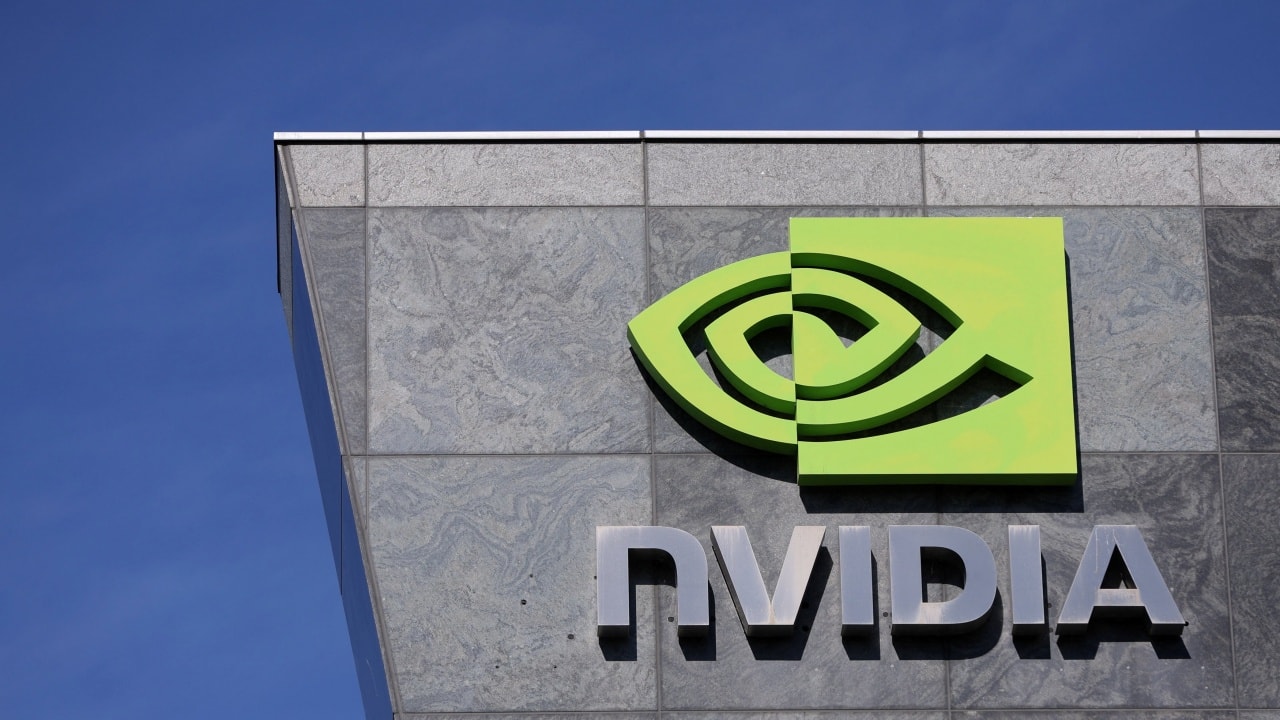
The Nvidia headquarters in Santa Clara, California, US, November 12, 2026. REUTERS/Manuel Orbegozo
At least six US-blacklisted Chinese universities purchased restricted Nvidia chips via obscure suppliers, exposing major enforcement gaps in blocking sensitive technology access.Did our AI summary help?
Webinar by Vishal Malkan
in your portfolio by Vishal Malkan

At least six Chinese universities placed on the US government’s Entity List have reported purchasing Nvidia processors subject to American export restrictions, raising questions about the enforcement of Washington’s curbs on advanced computing technology.
A review of nearly 300 Chinese procurement records by CNN found that the purchases took place over several years, with two universities closely linked to China’s military establishment reporting transactions in recent months.
The institutions bought relatively small quantities of older-generation and restricted Nvidia chips through lesser-known Chinese suppliers. The records, however, do not establish whether the processors were ultimately delivered or how the universities intended to use them.
The findings highlight the challenges facing US authorities as they attempt to prevent advanced computing hardware from reaching Chinese organisations considered sensitive to national security.
Military-linked universities among Nvidia chip buyers
Two institutions belonging to China’s ‘Seven Sons of National Defence’, a group of universities with close links to the People’s Liberation Army, featured in the procurement records.
Harbin Institute of Technology reportedly purchased an Nvidia A100 chip for around $7,000 in September. Northwestern Polytechnical University recorded purchases of four H200 processors worth approximately $240,000 in total in September and October.
Gregory Allen, chief executive of Decision Tree Research, said both institutions had strong connections to China’s military establishment. He added that research into the country’s military AI capabilities was likely to involve universities such as these.
CNN also identified purchases by Beihang University in Beijing, another member of the ‘Seven Sons of National Defence’. The records showed more than a dozen transactions between 2022 and 2024, largely involving A100 and A800 processors. Beihang has been on the US government’s blacklist since 2001.
The review found purchases by three other universities on the Entity List, which restricts organisations from receiving certain US-controlled goods without government approval.
How restricted Nvidia chips reached Chinese institutions
CNN examined nearly 300 procurement records collected through a commercial database. Chinese public universities and institutions are required to publish notices for certain purchases under the country’s procurement rules.
Of the 90 buyers examined, nearly 80% were universities, while research institutes accounted for close to 14%. Some government agencies were also found to have purchased Nvidia hardware.
The transactions involved models including the A100, A800, H100, H200 and H800. Most purchases were reportedly made through relatively obscure Chinese suppliers rather than directly from Nvidia or major authorised distributors.
The records do not establish how these suppliers obtained the chips or whether the hardware reached the institutions.
“Once these chips are in China, it’s very hard for anyone to be able to stop their sale,” Kate Koren, a former US export control official who is now research director at the Center for Strategic and International Studies (CSIS), told CNN.
Koren also said some A100 purchases could have involved processors acquired before US restrictions took effect in 2022, when the chips were still widely available in China.
US export controls face enforcement challenges
Washington has restricted exports of advanced Nvidia processors to China to prevent Beijing from accessing computing technology that could strengthen its military and artificial intelligence capabilities.
Although sales of A100 processors to China remain prohibited, the US introduced a policy last year allowing Nvidia to sell H200 chips to Chinese entities on a case-by-case basis. Such approvals come with conditions, including reporting requirements on the end users. Sales to universities on the US blacklist would be unlikely to receive approval, according to the report.
Experts cited by CNN said networks involved in chip smuggling often use shell companies, shipments routed through multiple countries, changes in currency transactions and falsified paperwork to evade detection. These methods make it harder for authorities to trace the supply chain and identify the final recipients.
US regulations require Nvidia and other chipmakers to assess the end users of products sold overseas and take steps to prevent restricted hardware from reaching prohibited organisations. However, the procurement records reviewed by CNN suggest that enforcement remains a challenge.
The review may not capture the full extent of purchases in China. Some institutions publish procurement notices only on local or internal platforms, while others remove them quickly. The commercial database used by CNN also does not include every notice issued by Chinese institutions.
China objects to US restrictions
The findings come as Washington seeks to tighten controls on the movement of AI-related hardware into China, including by addressing loopholes that allow Chinese companies to access computing power through overseas data centres.
The issue is also expected to feature in discussions between US President Donald Trump and Chinese President Xi Jinping, as the two countries compete over artificial intelligence and advanced technology.
China has rejected Washington’s justification for the export restrictions. Foreign Ministry spokesperson Mao Ning said Beijing opposed what she described as the US misuse of national security concerns to target Chinese institutions through discriminatory lists.
The procurement records reviewed by CNN do not establish whether the purchases violated US export rules. They do, however, show that universities on the Entity List reported buying Nvidia processors through Chinese suppliers, underscoring the difficulties of monitoring the movement of restricted technology.
Moneycontrol World Desk
first published: Nov 19, 2026 10:02 pm
Discover the latest Business News, Sensex, and Nifty updates. Obtain Personal Finance insights, tax queries, and expert opinions on Moneycontrol or download the Moneycontrol App to stay updated!
Watch
Trending news

Gurgaon CEO says India has culture of ‘looking busy’, not working for long hours; sparks debate
- No interruptions, no chores: Man signs deal with wife and daughter, pays Rs 8,500 to enjoy a week of GTA 6
- Indian Microsoft techie on maternity leave seeks advice on VEO: ‘Have newborn to take care of’
- Doctor confesses to wrongly removing patient’s ovaries during surgery: ‘Rookie mistake’
- ‘Pakistan used bottle tops, not sandpaper’: Shoaib Akhtar tells to stop ‘making fuss’ over Khawaja ball-tampering claims
- ‘Rs 47 lakh referral bonus’: Indian-origin AI founder offers big incentive to hire researchers at this startup
- She left a US biomedical research job to become an IPS Officer, cracked UPSC in 1st attempt: Meet Niharika Bhatt, Delhi’s north district DCP
- TVs for PS5 to play GTA VI: Top options from Samsung, LG, Sony, TCL and more that costs less than Rs 65000
- Boat, Logitech, Influish and Inde by ChairsCarte give employees a day off to play GTA VI
- Samsung Galaxy Z Fold7 effective price drops to Rs 84,138 on Flipkart with exchange and bank offers
- Ananya Panday calls 3 alleged exes on Koffee with Karan: Did she just teach us something big about moving on?
- “I make sure I work out for 60 minutes every day”: Maharashtra Deputy CM Eknath Shinde; fitness lessons to learn from him
- From serving whiskey in water bottle, secret lovers to last-minute baraat threats: A luxury wedding planner spills wildest behind-the-scenes secrets
- Indian Software Engineer with Rs 35 LPA salary refused US Tourist Visa after 3-minute interview: Did his answer about staying with a female friend in Seattle matter?
- Young CSK teammate abused MS Dhoni, ex-India opener reveals what legendary captain did in response
`);
}
if(res.stay_updated){
$(“.stay-updated-ajax”).html(res.stay_updated);
}
}catch(e){ console.log(e); }
});
},2000); // Reduced from 8s to 2s for better Core Web Vitals (LCP/UX)
});


