


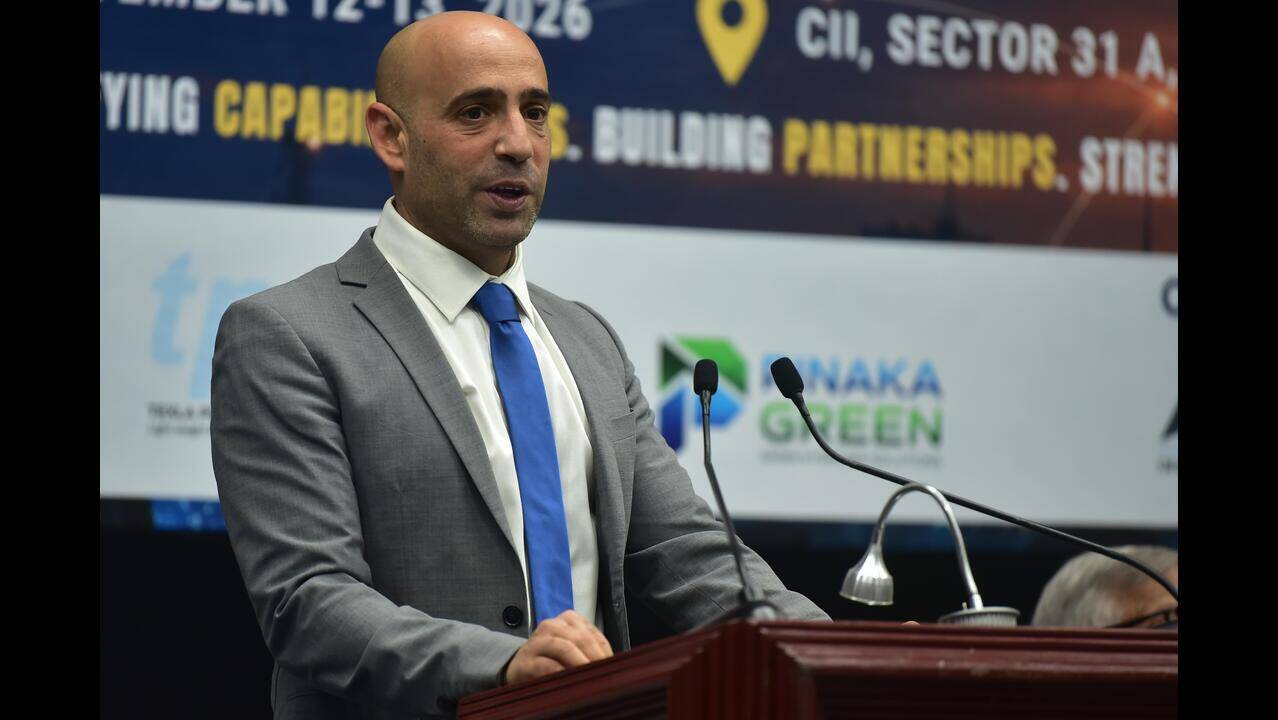
Chandigarh: India’s defence preparedness must focus as much on long-term endurance, industrial capacity, and infrastructure resilience as on acquiring advanced weaponryAssessing the shift in modern warfare from isolated strikes to prolonged battles involving missiles, drones, and cyberattacks, Gal said the primary challenge is sustaining operations after the initial exchange
He also emphasised deepening India-Israel strategic cooperation through co-production.Gal is the founder and principal of Line of State, a strategic advisory practice working with govts and decision-makers on risk and security. He previously served as vice-president of external relations at Israel Aerospace Industries (IAI) and held govt advisory roles.Drawing lessons from the globlal conflicts, he noted that repeated missile and drone strikes simultaneously test air defence, civilian continuity, and industrial replenishment.
High interception rates alone do not ensure success if essential services fail or replacement supplies run out.Highlighting the economics of modern combat, he warned against relying indefinitely on expensive interceptors to counter cheap drones and missiles. Affordable counter-drone technologies, electronic warfare, and directed-energy weapons offer viable alternatives, provided they are proven under real-world conditions.Stressing that prototypes alone are insufficient, Gal said, “Production capacity is a combat capability.” He explained that nations must be able to manufacture at scale, replenish stocks, repair equipment, and maintain systems throughout their operational lifecycle.Gal urged a shift in India-Israel defence ties from a traditional buyer-seller model to genuine co-development and co-production.
Citing the Medium-Range Surface-to-Air Missile (MRSAM) programme—jointly developed by DRDO and IAI—he said future partnerships must give Indian engineers meaningful control over technology, upgrades, intellectual property, and maintenance.He identified five priority areas for bilateral cooperation: sovereign surveillance and decision-support systems, sustainable air and missile defence, affordable counter-drone protection, resilient national infrastructure, and independent industrial capabilities.The defence expert added that Israel also has lessons to learn from India.
Referring to Operation Sindoor, he pointed to Turkish-origin drones and Chinese-origin missile debris documented in India’s official account of the conflict, noting that Israel should study India’s operational assessments and adaptations.Ultimately, he noted, future military strength will be measured not merely by advanced arsenals, but by a nation’s ability to sustain combat, recover rapidly, and independently build next-generation technology.You Can Also Check: Gold Rate in Chandigarh | Silver Rate in Chandigarh | Bank Holidays in Chandigarh | Public Holidays in Chandigarh | Chandigarh AQI | Weather in Chandigarh | Petrol Price in Chandigarh | Diesel Price in Chandigarh | CNG Price in Chandigarh | LPG Price in ChandigarhStay updated with the latest Chandigarh news.
Download the TOI App.