





STORY: WHO / TEDROS PUBLIC HEALTH PRESSER
TRT: 05:39
SOURCE: WHO
RESTRICTIONS: PLEASE CREDIT WHO ON SCREEN
LANGUAGES: ENGLISH / NATS
DATELINE: 07 OCTOBER 2026, GENEVA, SWITZERLAND / FILE
FILE – GENEVA, SWITZERLAND
1. Close up, logo at the WHO headquarters
07 OCTOBER 2026, GENEVA, SWITZERLAND
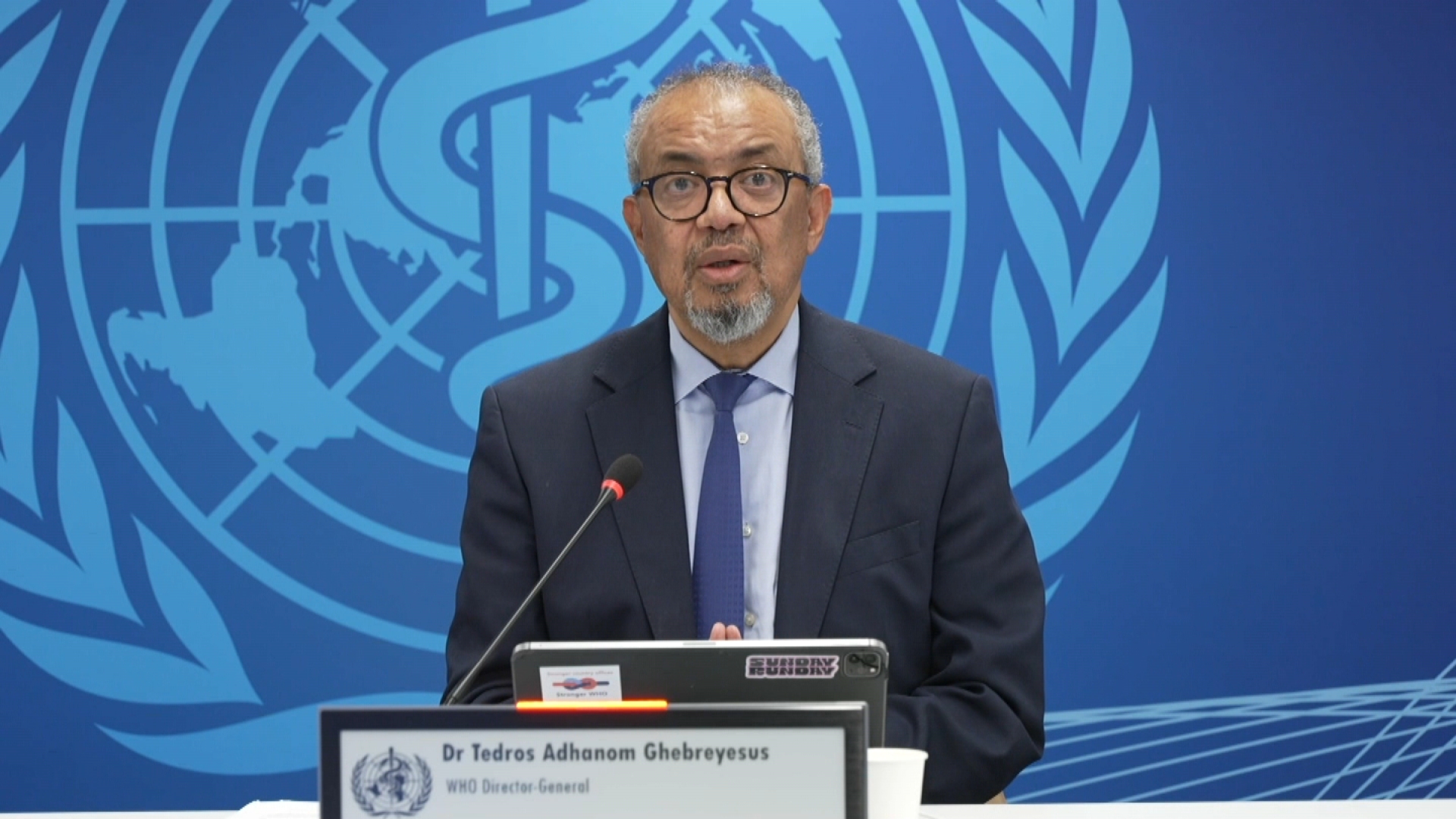
2. Wide shot, press briefing room
3. SOUNDBITE (English) Tedros Adhanom Ghebreyesus, Director-General, World Health Organization (WHO):
“Last Friday, the 2nd of October, the first media reports emerged of a suspected case of pneumonic plague in a laboratory worker at the Irkutsk Antiplague Research Institute in the Russian Federation. The lab worker died after being hospitalized with severe pneumonia. Initial media reports suggested pneumonic plague following an accidental laboratory exposure.”
4. Wide shot, press briefing room
5. SOUNDBITE (English) Tedros Adhanom Ghebreyesus, Director-General, World Health Organization (WHO):
“WHO is aware that the Russian government held a meeting on the 2nd of October because they suspected a resident of the Irkutsk oblast had contracted a dangerous infection.”
6. Wide shot, press briefing room
7. SOUNDBITE (English) Tedros Adhanom Ghebreyesus, Director-General, World Health Organization (WHO):
“On Saturday, WHO asked the Russian Federation for more information, in accordance with the International Health Regulations. Yesterday, the Russian Federation responded, saying that no case of plague had recently been reported in the Irkutsk oblast, and that they had placed about 200 contacts in quarantine.”
8. Wide shot, press briefing room
9. SOUNDBITE (English) Tedros Adhanom Ghebreyesus, Director-General, World Health Organization (WHO):
“However, WHO has requested further information on the laboratory tests conducted on the individual who died and the contacts, more detail on what prompted the public health measures, and details about the health status of the contacts. We have also sought verification of media reports of a second employee with pneumonia of undetermined cause.”
10. Wide shot, press briefing room
11. SOUNDBITE (English) Tedros Adhanom Ghebreyesus, Director-General, World Health Organization (WHO):
“WHO has offered technical support related to plague and lab biosafety and biosecurity.
And we don’t yet have the full picture of this event, and we are not able to conduct a full risk assessment.”
12. Wide shot, press briefing room
13. SOUNDBITE (English) Tedros Adhanom Ghebreyesus, Director-General, World Health Organization (WHO):
“Timely, complete and transparent information sharing under the International Health Regulations is essential to clarify conflicting reports and enable an accurate assessment of potential public health risks.”
14. Wide shot, press briefing room
15. SOUNDBITE (English) Maria Van Kerkhove, Director, Epidemic and Pandemic Management:
“There are thousands of cases of suspected plague every year that happen around the world. There’s bubonic plague, and there’s pneumonic plague.”
16. Wide shot, press briefing room
17. SOUNDBITE (English) Maria Van Kerkhove, Director, Epidemic and Pandemic Management:
“Since 2019 to 2025, ten countries reported almost 4,000 suspected human plague cases and 423 deaths.”
18. Wide shot, press briefing room
19. SOUNDBITE (English) Maria Van Kerkhove, Director, Epidemic and Pandemic Management:
“So, plague is a bacteria. It’s caused by a bacteria. There are antibiotics that can treat against this. So, if anyone does have an infection with plague, it can be treated. So obviously early clinical care, good awareness around this is really important. But I do kind of want to contextualise this. When we do a risk assessment, we will look at the information that we have about the event. But we will also put it in context about what we know about the pathogen itself.”
20. Wide shot, press briefing room
21. SOUNDBITE (English) Tedros Adhanom Ghebreyesus, Director-General, World Health Organization (WHO):
“Now to the Ebola epidemic in the Democratic Republic of the Congo. The number of confirmed cases has now reached 8,665, with 4,178 confirmed deaths. In some areas, there are clear signs that the epidemic is slowing down, although in others it is continuing to grow.”
22. Wide shot, press briefing room
23. SOUNDBITE (English) Tedros Adhanom Ghebreyesus, Director-General, World Health Organization (WHO):
“Since the outbreak began, contact tracing has improved significantly, around 2,000 alerts are reported every day, and about 5 million people have been reached through community engagement activities.”
24. Wide shot, press briefing room
25. SOUNDBITE (English) Tedros Adhanom Ghebreyesus, Director-General, World Health Organization (WHO):
“Clinical trials of therapeutics are progressing, with more than 600 people enrolled; A vaccine trial is expected to start later this month, and we are working on ensuring access to these products should they prove efficacious in trials.”
26. Wide shot, press briefing room
27. SOUNDBITE (English) Tedros Adhanom Ghebreyesus, Director-General, World Health Organization (WHO):
“But we continue to face significant challenges. The majority of deaths still happen in the community instead of in treatment centres, and contact tracing is still not at the level needed.”
28. Wide shot, press briefing room
29. SOUNDBITE (English) Tedros Adhanom Ghebreyesus, Director-General, World Health Organization (WHO):
“And we cannot forget that this epidemic is unfolding in an area beset by a prolonged humanitarian crisis. While transmission is going down overall, new hotspots continue to appear, including in areas close to the border with South Sudan.”
30. Wide shot, press briefing room
31. SOUNDBITE (English) Tedros Adhanom Ghebreyesus, Director-General, World Health Organization (WHO):
“Kenya yesterday reported a case of Ebola in a Kenyan citizen who fell ill in DRC, was treated at several facilities there, then travelled to the Kenyan capital Nairobi via the Ugandan capital Kampala.”
32. Wide shot, press briefing room
33. SOUNDBITE (English) Tedros Adhanom Ghebreyesus, Director-General, World Health Organization (WHO):
“Immediately upon arrival in Nairobi, he was taken to hospital where he was isolated and Ebola was confirmed. He received care but died on Monday this week. Kenyan authorities are monitoring 55 contacts, including passengers and crew who were with the patient on the flight from Kampala to Nairobi.”
34. Wide shot, press briefing room
35. SOUNDBITE (English) Tedros Adhanom Ghebreyesus, Director-General, World Health Organization (WHO):
“I commend the Kenyan government for its prompt action and for reporting the case to WHO under the International Health Regulations in a timely way.”
36. Wide shot, press briefing room
37. SOUNDBITE (English) Tedros Adhanom Ghebreyesus, Director-General, World Health Organization (WHO):
“WHO advises against blanket travel or trade restrictions, which are less effective than screening, contact tracing and other measures.”
38. Wide shot, press briefing room
“We don’t yet have the full picture of this event, and we are not able to conduct a full risk assessment,” World Health Organization (WHO) Director-General Tedros Adhanom Ghebreyesus told reporters, referring to a suspected case of pneumonic plague in a laboratory worker at the Irkutsk Antiplague Research Institute in Russia.
Speaking in Geneva today (7 Oct), Tedros said
Speaking in Geneva today (7 Oct), Tedros said that, in response to WHO queries, the Russian Federation stated that no plague case had recently been reported in the Irkutsk oblast and that about 200 contacts had been placed in quarantine.
WHO Director of Epidemic and Pandemic Management Maria Van Kerkhove noted that plague is caused by a bacteria and “can be treated” with antibiotics, adding that ten countries reported almost 4,000 suspected human cases and 423 deaths between 2019 and 2025.
On the Ebola epidemic in the Democratic Republic of the Congo, which has reached 8,665 confirmed cases and 4,178 confirmed deaths, Tedros commended Kenya for promptly reporting a fatal case in a citizen who travelled from DRC to Nairobior trade restrictions.”



