





For years, the longstanding tussle between developing and developed nations over who will pay for the transition to a greener, more sustainable future has been the biggest barrier, slowing global efforts to achieve the Paris Agreement’s key objective of limiting temperature rise to 1.5°C above pre-industrial levels.
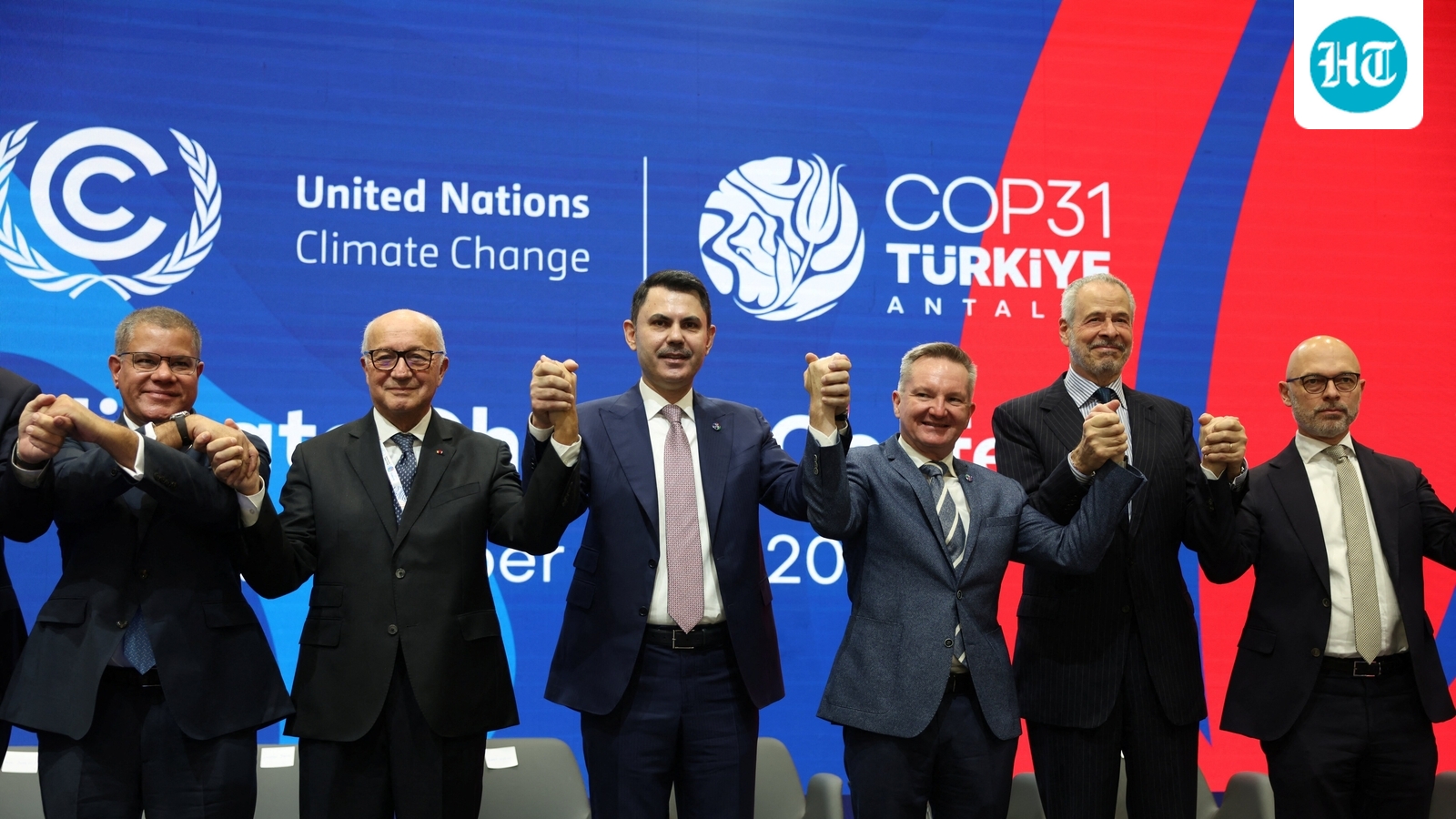
With the climate crisis becoming a harsh reality rather than a future concern, world leaders, experts, and civil society representatives meeting in Antalya, Turkey, for COP31 (31st Conference of the Parties) should now realise that it is crucial that the debate about financing must now be accompanied by an equally serious focus on implementation.
COP31 comes a year after COP30 in Belém, which delivered important steps on adaptation, implementation, and international cooperation. However, disagreements over the pace of the energy transition, fossil fuel dependency, and the delivery of climate finance demonstrated how much work remains.
Contentious issues such as adaptation funding
As a result, contentious issues such as adaptation funding and the future of international carbon markets under Article 6 of the Paris Agreement remain central to international climate negotiations and are likely to take centre stage once again.
As extreme weather events such as severe floods, droughts, and heatwaves become more frequent as a direct result of the climate crisis, policymakers increasingly recognise that financing alone may not drive the transition.
The urgency of the situation warrants that the leaders at COP31 should now focus more on roadmaps to accelerate implementation of low-carbon initiatives such as developing renewable energy infrastructure and curbing emissions by bringing governments together with cities, businesses, financial institutions, civil society, indigenous peoples, and local communities to turn climate commitments into action.
Thankfully, a consensus is being built that beyond
Thankfully, a consensus is being built that beyond increasing commitments, countries must address barriers to accessing funding, including complex procedures, limited institutional capacity, and insufficient grant-based finance.
For a developing country like India, the challenge extends well beyond mobilising finance. For the world’s most populous nation, the transition to a greener and more sustainable economy depends on its ability to develop a strong pipeline of technicallyl capacity to implement them to deliver them across renewable energy, grid infrastructure, industrial decarbonisation, clean cooking, sustainable agriculture, and climate resilience
There is no doubt that climate finance is going to be the key test for countries participating in COP31. However, with the adoption of the New Collective Quantified Goal (NCQG) at COP 29, the attention is gradually turning to the implementation and scaling up of green initiatives.
NCQG sets a floor of at least $300
NCQG sets a floor of at least $300 billion a year by 2035 for climate action support from developed nations to developing countries, framed around mobilisation from a wide variety of trillion a year, against the costed needs of 98 developing countries, estimated at $5.0–6.9 trillion cumulatively through 2030
While finance remains the primary battleground, a much larger front has opened in trade. The latest flashpoint is the EU’s Carbon Border Adjustment Mechanism (CBAM), which entered its definitive phase in January 2026, with the UK set to introduce its own from January 2027.
India and other developing economies have raised concerns about the implications of unilateral carbon border measures such as the EU’s CBAM, arguing that they could impose additional costs on exporters and create new trade barriers.
India has officially stated its opposition to unilateral
India has officially stated its opposition to unilateral measures and warned that it would resist any such move by the EU, calling it “unilateral, punitive, discriminatory, and protectionist.”
The focus of climate challenge debate is shifting from mobilising capital to converting capital into measurable climate outcomes. The real challenge is to ensure that it reaches vulnerable communities and businesses and helps them build their resilience against climate risks.
Capital does not automatically create bankable projects. Projects need robust feasibility assessments and technically sound design, local partnerships that can implement at scale, and measurement, reporting, and verification (MRV), all essential parts of the project, even before an investor commits capital.
With weaker, less efficient institutions, unclear regulations,
With weaker, less efficient institutions, unclear regulations, and underdeveloped project pipelines, the intended impact may not materialise even if funds are readily available.
This has been repeatedly observed across emerging markets in Asia, Africa, and Latin America: Even substantial financial commitments may remain underutilised or fail to achieve intended outcomes when these underlying constraints go unaddressed.
Investors need more than capital availability to commit to long-term climate projects. Predictable regulatory frameworks, commerciallyansparent monitoring systems, and clear revenue pathways all help reduce investment risks
The world has certainly become better at announcing climate ambitions and commitments, but ultimately, the success of COP31 or any summit about climate action will depend on the ability of countries to come together, overcoming differences to create the governance and policy frameworks needed to convert that commitment into measurable, durable, and credible climate outcomes.
(The views expressed are personal)
This article is authored by Narendra Prajapati, CEO, MicroEnergy Credits.


