



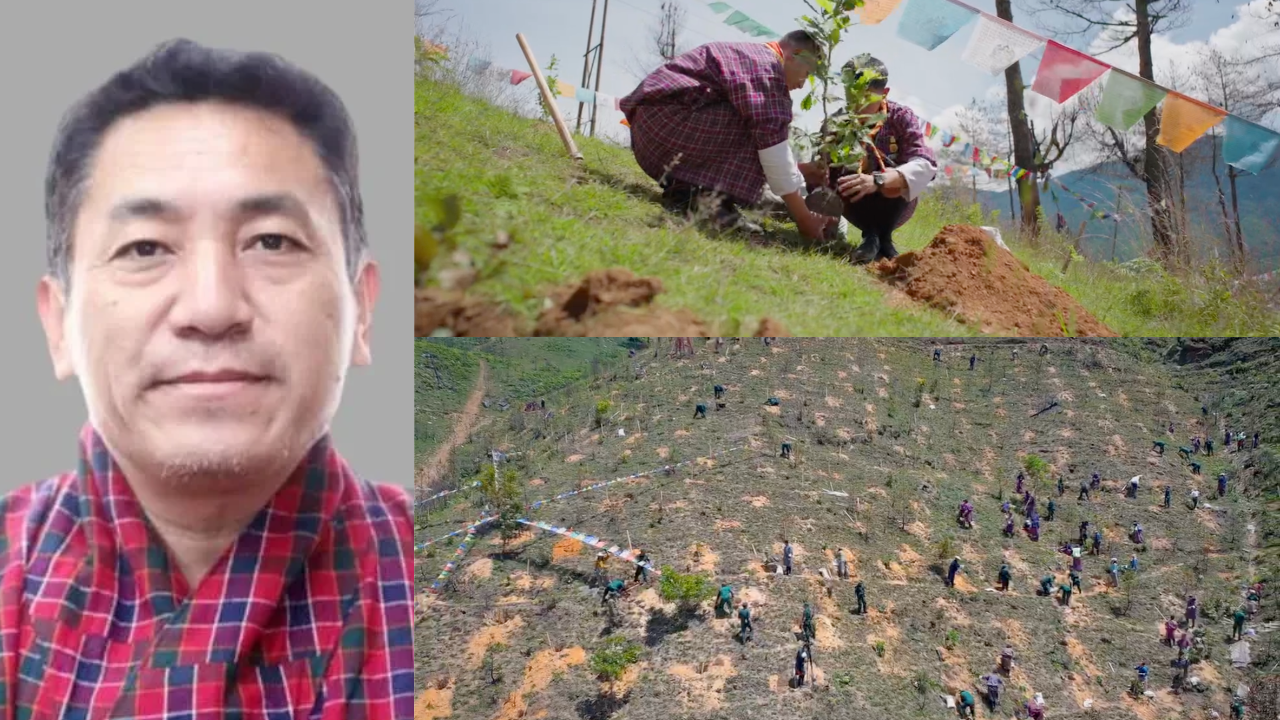
Last week, Bhutan won the 2026 Earthshot Prize in the Protect and Restore Nature category for Restore Bhutan, a programme the government launched last year that targets to restore 50,000 hectares of degraded forests, farmlands and urbans landscapes by 2030. Its benefits go well beyond the borders: protecting nature upstream secures critical Himalayan water systems that sustain communities downstream across the subcontinent.
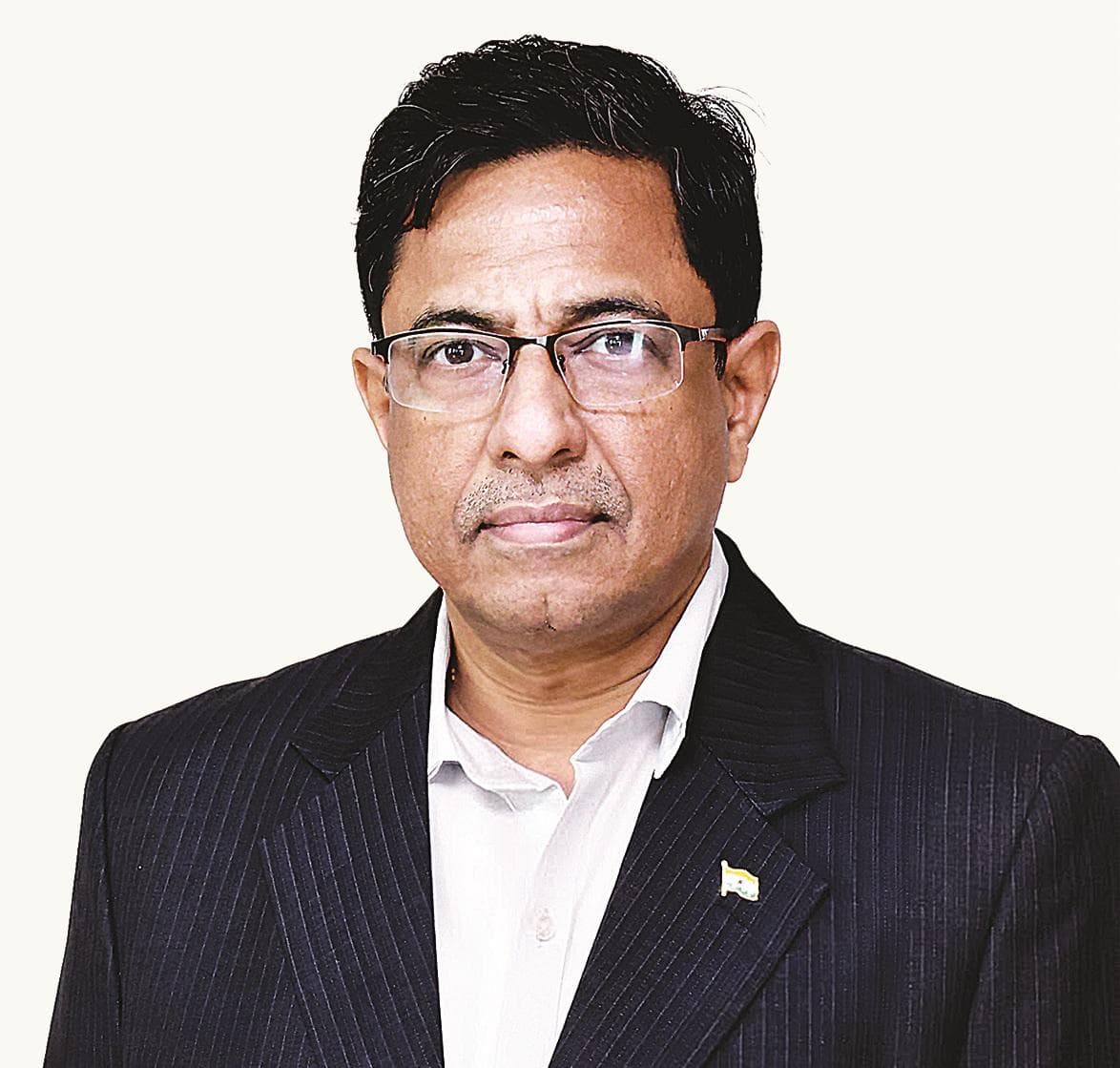
In an interview with TOI, Karma Tenzin, director of Bhutan’s Department of Forests & Park Services, explains how the programme works in practice, how the country plans to use the £1 million prize money, and what other mountain regions can learn from Bhutan’s experience.What are the chief causes of land degradation in Bhutan?Land degradation in Bhutan is driven by a combination of natural and human-induced pressures and is exacerbated by climate change.
The gradual abandonment of some agricultural land has also contributed to it. Targeted forest management, including scientific thinning, can help reduce fuel loads and lower the risk of forest fires and pest and disease outbreaks, while supporting healthier and more resilient forest stands.Emerging trends indicate that our landscapes are facing growing pressures. Of the 7,399 water
Similarly, between 2021 and 2024, a total
Similarly, between 2021 and 2024, a total of 258 forest fires affected approximately 17,988.5 hectares of forest land.These emerging challenges reinforce the importance of Bhutan’s long-standing commitment to environmental conservation, which is deeply rooted in our development philosophy of Gross National Happiness. Initiated under the visionary leadership of His Majesty the Fourth King and continued under the leadership of His Majesty the King, this commitment places environmental conservation at the heart of national development.
It is further enshrined in our Constitution, which mandates that at least 60% of the country’s total land area remains under forest cover for all time. Today, nearly 70% of Bhutan remains under forest cover, with more than half of the country’s territory designated as protected areas.However, conservation cannot be measured by forest cover alone. The health, resilience and productivity of our landscapes are equally important.
We must therefore move beyond protecting what remains and take proactive steps to restore degraded ecosystems, strengthen watershed management, prevent forest fires and build climate resilience across our landscapes.How does the Restore Bhutan programme work on the ground? Restore Bhutan follows a landscape-based approach. The process begins with identifying and mapping degraded areas and understanding the root causes and underlying drivers of degradation.
We use field assessments, GIS mapping, satellite imagery
We use field assessments, GIS mapping, satellite imagery and the Forest Information Reporting and Monitoring System (FIRMS) to identify priority areas, assess their condition and determine appropriate restoration interventions.Once a priority site is identified, we undertake detailed assessments to understand its ecological conditions, the extent of degradation and the needs of the local communities.
Restoration measures are then tailored to the specific landscape. These may include planting native and climate-resilient tree species, assisted natural regeneration, enrichment planting, restoration of fire-affected forests, watershed and springshed rehabilitation, and agroforestry.For instance, in a landscape affected by repeated forest fires and soil erosion, the first step would be to assess the extent of damage, soil conditions, water availability and the remaining natural vegetation.
Based on this assessment, we would identify suitable native species and develop a restoration plan that combines tree planting with natural regeneration, soil conservation and watershed rehabilitation.Local communities are central to this process. They are engaged from the planning and implementation stages through to maintenance and long-term monitoring. Their knowledge, participation and ownership are essential to ensuring that restoration efforts respond to local needs, generate livelihood opportunities and deliver lasting benefits.We monitor progress through field measurements, satellite imagery and drone mapping.
This helps us track seedling survival, tree growth,
This helps us track seedling survival, tree growth, the extent of restored areas, carbon sequestration and improvements in ecosystem conditions.The Earthshot Prize money is a hefty £1 million. How will it be used?Our priority is to use the funding strategically to strengthen the scientific and technical foundations of restoration, support priority landscape interventions, enhance monitoring and evaluation, and strengthen community participation.
In large-scale restoration initiatives, investing in sound science, effective implementation and long-term monitoring from the outset is essential to ensuring that restoration delivers lasting results.This support will complement the efforts of our national and international partners and help accelerate our ambition to restore 50,000 hectares of degraded landscapes, strengthen forest fire management, and sequester nearly two million metric tonnes of carbon dioxide over the coming years.Beyond the financial award, winning the Earthshot Prize places Bhutan’s conservation efforts on an important international platform, raising global awareness of our approach to environmental stewardship and creating opportunities to attract new partners, technical expertise and additional climate and nature finance.It also gives Bhutan an opportunity to share its experience with the world, particularly how strong environmental policies, community participation and innovative financing can work together to address environmental challenges.What would it take to replicate this model in other mountain countries?I believe the most important lesson from Bhutan is that successful conservation requires a long-term national commitment, supported by strong institutions, regulatory framework, community participation and sustainable finance.
For other mountain countries interested in adopting a similar approach, I would highlight four important elements.First, conservation and restoration should be envisioned as an economic development goal and not as isolated project intervention. It must be integrated into national development plans and priorities with clear goals supported by strong political commitment and clear institutional responsibilities.Second, restoration must be guided by science and reliable information.
Countries need the technical capacity to identify degraded
Countries need the technical capacity to identify degraded landscapes, select appropriate restoration interventions and monitor ecological outcomes.Third, local communities must be actively involved. Their participation and ownership are critical to ensuring that restoration is maintained over the long term and contributes to improved livelihoods.Finally, sustainable financing is essential.
Traditional project-based funding often cannot support the long timeframes required for ecosystem restoration. Innovative mechanisms such as blended finance, results-based financing and carbon finance can help mobilise additional resources from governments, development partners, philanthropies and the private sector.Restore Bhutan, developed under the Mountains to Mangroves Partnership (a reforestation and conservation project in South Asia supported by Conservation International), brings these elements together by linking government leadership, scientific expertise, landscape restoration, innovative finance and community stewardship.
Of course, every country will need to adapt the approach to its own ecological conditions, institutions and development priorities. But the underlying principles are widely applicable.Bhutan would be pleased to share its experiences and lessons with other mountain countries. Ultimately, protecting and restoring mountain ecosystems is a shared responsibility, as their health has implications far beyond national boundaries.Bhutan has over 600 glaciers.
After the glacial collapse in Nepal in August,
After the glacial collapse in Nepal in August, what is the country doing to monitor glacial lakes and prevent a similar disaster?Bhutan is highly conscious of the risks associated with glacier retreat and glacial lake outburst floods, particularly as rising temperatures accelerate glacier melting and can increase the instability of glacial lakes. Given our mountainous terrain and the communities, infrastructure and economic activities located downstream of glacial lakes and river systems, monitoring these risks is a national priority.Our approach needs to focus on three key areas: monitoring, early warning and preparedness.First, we must continuously identify and assess high-risk glacial lakes, monitor changes in their size and condition, and strengthen scientific evaluations of downstream hazards.
We conduct these assessments at regular intervals, with our most recent review completed in 2025. Notably, when a Glacial Lake Outburst Flood (GLOF) occurred recently in October 2026 from one of these identified high-risk lakes, our response was prompt and zero lives were lost.Second, we need to strengthen early-warning systems and communication channels so communities and agencies receive timely alerts when threats emerge.
To achieve this, we have established Standard Operating Procedures (SOPs) to ensure a fast, seamless flow of information.Third, preparedness at both the community and institutional levels is equally critical. Downstream communities must understand the risks, know how to respond to alerts, and be ready to evacuate when necessary. To build this readiness, we conduct frequent evacuation mock drills so residents know exactly how and where to evacuate.We must also recognize that Himalayan river systems are deeply interconnected, meaning Glacial Lake Outburst Floods (GLOFs) and other mountain hazards can have consequences that cross national borders.
Regional cooperation, scientific collaboration, and data sharing are therefore essential. To support this, we work closely with intergovernmental organisations like the International Centre for Integrated Mountain Development, have established joint working groups with neighboring countries, and maintain active, operational communication channels.Ultimately, our priority is to build the capacity to anticipate, monitor, and manage these hazards before they escalate into disasters.You Can Also Check: Gold Rate in Mumbai | Silver Rate in Mumbai | Bank Holidays in Mumbai | Public Holidays in Mumbai | Mumbai AQI | Weather in Mumbai | Petrol Price in Mumbai | Diesel Price in Mumbai | CNG Price in Mumbai | LPG Price in MumbaiStay updated with the latest Mumbai news.
Download the TOI App.